CATATAN NUSANTARA / 37
CHAPTER 6-2PEOPLE · TRADITIONAL KNOWLEDGE · TOBA BATAK
Batak Datu: Tunggal Panaluan and Pustaha
A datu appears during the guardians’ journey in Episode 6-2. This note offers historical context without identifying a fictional character with one real practitioner or practice.
Datu is not a simple label
In Toba Batak traditions, datu are specialists in knowledge and ritual. Museum sources describe responsibilities involving calendars, divination, healing, protection, and ceremonies. These varied across individuals and periods, making a single modern professional label inadequate.
The term does not automatically imply wrongdoing or harmful sorcery. Historical sources associate some practices with healing and protection and others with magic or attack. This note explains cultural terminology, not the truth of supernatural claims.
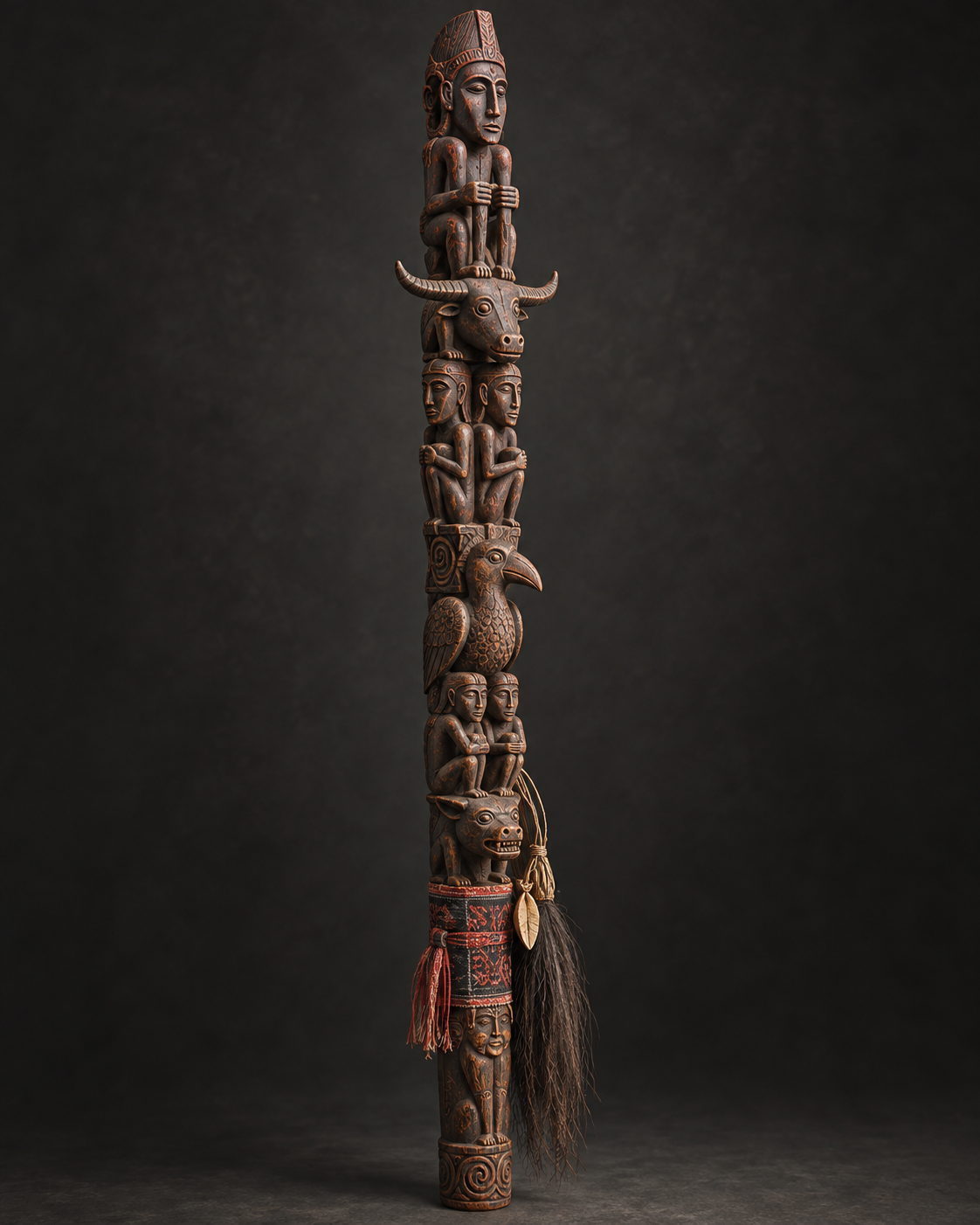
Tunggal Panaluan
A tunggal panaluan is a carved ritual staff in Batak traditions. The Metropolitan Museum describes ceremonial use by datu and carved sequences of human and animal figures. Such objects deserve community and historical context rather than sensational treatment.
Its appearance in Episode 6-2 develops the fictional atmosphere and conflict. The scene records no identified ceremony and teaches no method of making or using a ritual object.
Pustaha: folded bark manuscripts
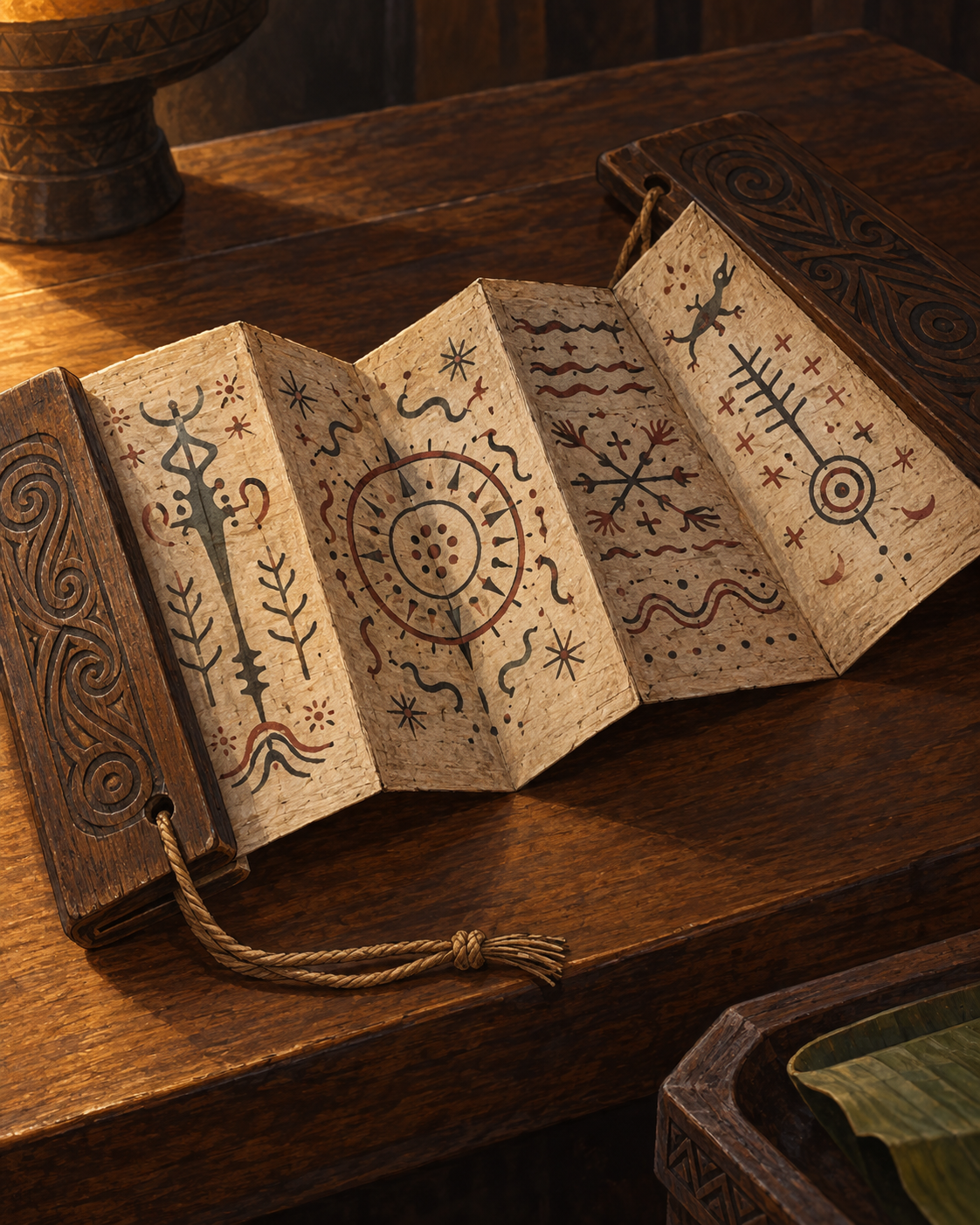
Pustaha are accordion-fold manuscripts commonly made from inner tree bark, often protected by wooden or bone covers. The Library of Congress describes Batak divination manuscripts used by datu, while collections also show material concerning ritual knowledge.
Contents may include calendars, divination, protective formulas, or remedies. They vary: pustaha is not one standard book. Public collections support research, preservation, and renewed reading of Batak scripts.
Knowledge beyond a single label
Relationships between datu, manuscripts, healing, and ritual resist a single label. Readers can distinguish documented cultural knowledge, historical and regional variation, and the novel’s imaginative elements.
The fictional datu’s name, actions, and abilities do not represent every Batak tradition or everyone historically called datu.