
English Catatan 49

CATATAN NUSANTARA / 49

CHAPTER 8-2

FOOD · RAMADAN · BANTEN

Ketan Bintul: Banten Flavours and Ramadan Memory

Bahasa Indonesia

Ketan bintul combines dense, chewy sticky rice with spiced coconut serundeng. For many people in Banten it also recalls Ramadan, family, and shared meals.
Ketan bintul with serundeng, a modern home serving
Ketan bintul with serundeng, a modern home serving. Sticky rice, banana leaf, and coconut are visible; this is not a reconstruction of seventeenth-century court food. Photograph: Hesti Hauraa Yusuf / Cookpad — Ketan Bintul/Ketan Serundeng Khas Banten. Shown uncropped; rights remain with the owner. Hesti Hauraa Yusuf / Cookpad — Ketan Bintul/Ketan Serundeng Khas Banten

Different roles for rice and coconut

Steamed and pounded sticky rice provides the dense, chewy base. Serundeng is seasoned toasted grated coconut. Contrasting textures are important to the dish.

Accompanying meat or broth varies between families and vendors. The story’s gulai is one possible accompaniment, not a universal rule.
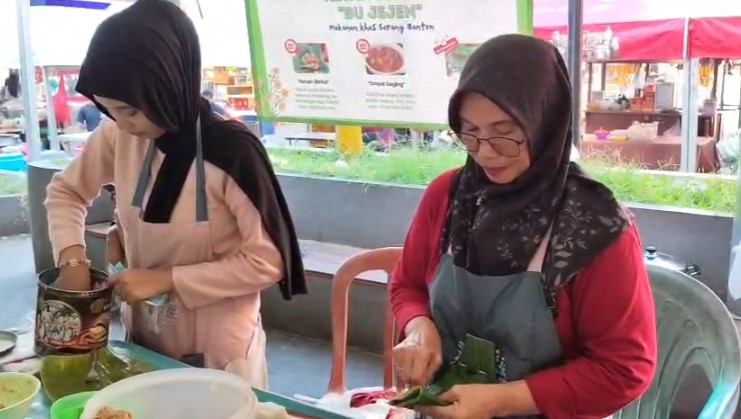
Preparation at Ibu Jejen’s stall in Serang, reported during Ramadan 2026
Preparation at Ibu Jejen’s stall in Serang, reported during Ramadan 2026. A living Banten tradition. Photograph: Jaya / Bantentv.com. Shown uncropped; rights remain with the owner. Jaya / Bantentv.com

Ramadan and shared memory

ANTARA’s Ramadan 2012 coverage of Serang vendors shows continued demand among many available snacks. A food survives through buying times, meeting places, and breaking-fast habits as well as recipes.

Taste may evoke home or a person. Experiences differ, but communal eating traditions help transmit memories.

The Great Mosque of Banten today, providing religious and culinary context rather than documenting a breaking-fast event
The Great Mosque of Banten today, providing religious and culinary context rather than documenting a breaking-fast event. Source: Indonesian Finance Ministry, public domain according to Commons, via Wikimedia Commons. Shown uncropped. Kementerian Keuangan RI Domain publik menurut keterangan Commons

Stories of sultans and limits of evidence

Local traditions associate ketan bintul with Sultan Maulana Hasanuddin and court meals. These stories place food within Banten’s memory.

An origin tradition differs from a dated recipe. Mentioning a sultan does not establish a dish’s exact form, seasoning, or serving in every century.

In Chapter 8

For Hasan, his mother’s remembered flavours make homecoming personal. A neighbour’s cooking and Intan’s offering of food turn eating into care.

An accuracy note: royal associations are presented as local tradition. Hasan’s family scenes are fictional. Food and stall photographs show modern serving, not recipes or conditions in 1683.
← Return to Episode 8-2